Hardware·
Friend 2 AI Pendant Review: Always Listening, But Infrastructure Questions Remain
The second-gen Friend necklace adds a speaker and OpenAI models, yet early hands-on reveals latency, personality limits, and scaling challenges for always-on consumer AI.
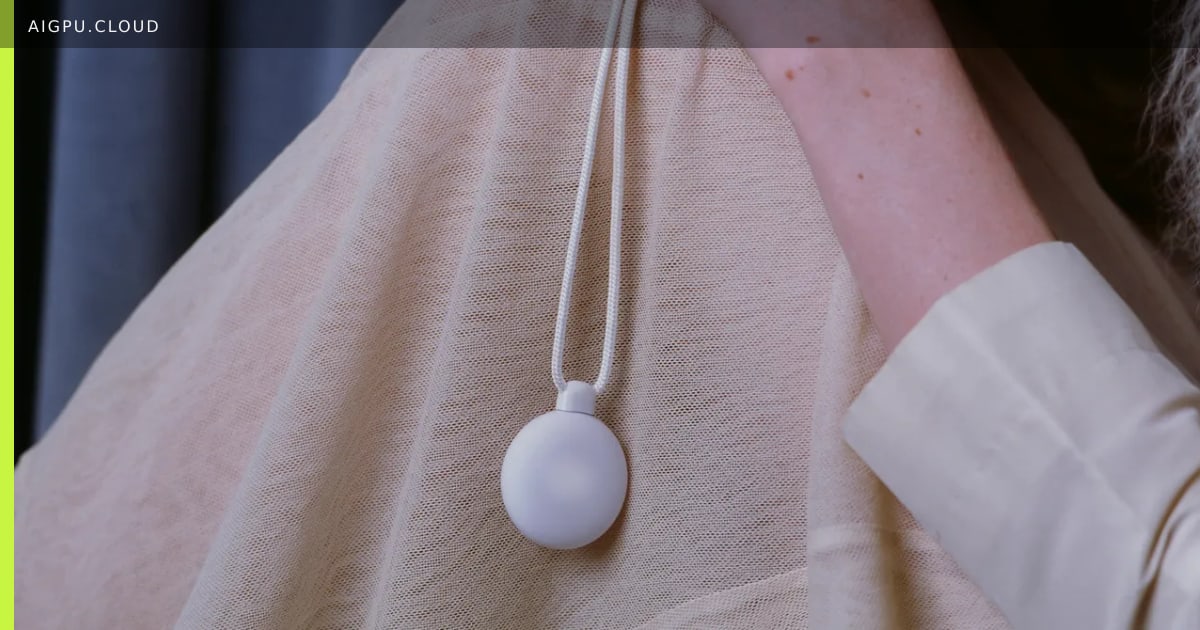
Avi Schiffmann's Friend 2 pendant arrives at $249 with a built-in speaker and OpenAI's latest models, promising an always-listening companion that builds a memory map of your conversations. The device activates on voice or tap, but early testing shows it frequently interrupts — responding to ambient chatter on Zoom calls and requiring deliberate tapping to silence. The hardware ships with one locked-in persona, though the companion app lets users spawn multiple named characters; in practice, the personalities feel indistinguishable, defaulting to a generic chatbot tone.
Why it matters for GPU and AI infrastructure
Always-on wearables like Friend 2 imply continuous inference streams: wake-word detection, streaming ASR, LLM generation, and TTS — all with sub-second latency targets. Running this on OpenAI's API means every device is a persistent cloud tenant. At scale, millions of pendants would demand massive GPU capacity for real-time inference, efficient batching, and cold-start mitigation. Edge offload (on-device whisper-small or distilled models) could cut round-trips, but the current architecture leans heavily on centralized compute.
Meta's competing Muse Charm and Schiffmann's own roadmap for a similar form factor signal a coming wave of AI jewelry. For infrastructure providers, the pattern is clear: consumer AI hardware will drive bursty, always-on inference workloads that differ from batch training. Capacity planning must account for diurnal usage spikes, multi-tenant model serving, and the economics of per-device API calls versus dedicated inference clusters.
The reviewer's frustration with latency and persona depth also highlights a product-infrastructure gap: richer, lower-latency experiences need either larger models served closer to the edge or aggressive quantization pipelines. As AiGpu monitors this category, the takeaway is that wearable AI success depends as much on serving stack efficiency as on industrial design.
- aigpu
- ai gpu
- ai gpu cloud
- aigpu dubai
- wearable ai
- inference infrastructure
- consumer ai hardware
- openai api
By AiGpu Editorial · Editorial rewrite based on public reporting (Wired AI)
← All articles