Industry·
Machine Learning Breakthrough Extends Reliable Weather Forecasts to Six Weeks
A new ML error-correction model doubles subseasonal forecast accuracy, beating climatology for the first time in the 2–6 week range and improving extreme-event prediction — a workload that demands serious GPU compute.
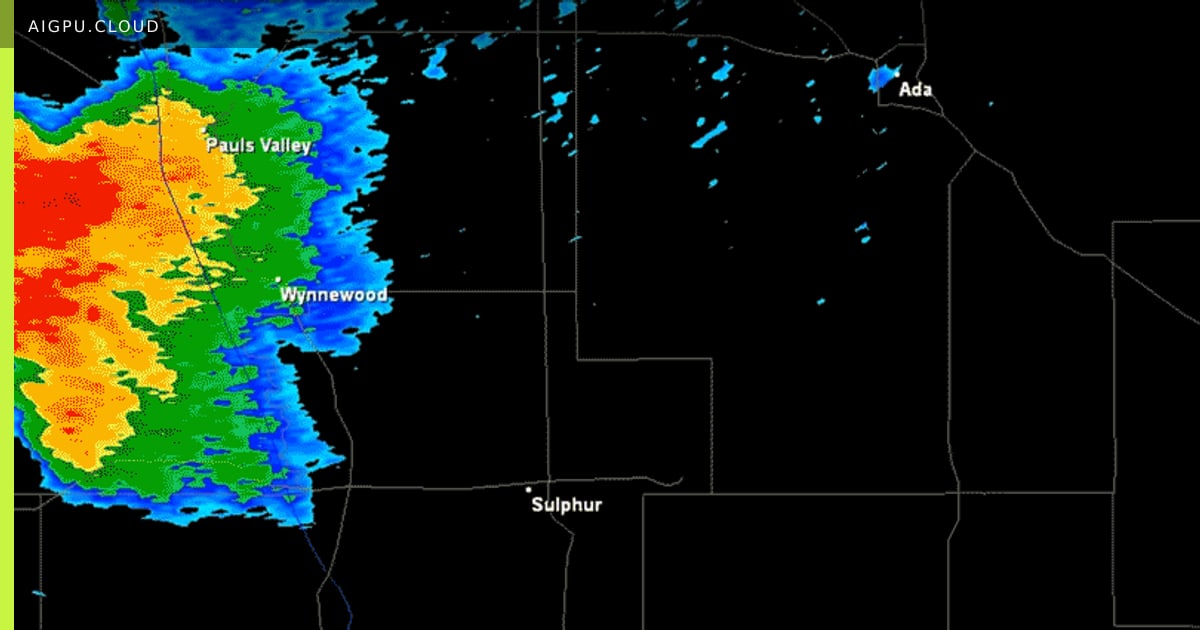
A research team spanning MIT, Microsoft, ECMWF, and several universities has demonstrated that a machine-learning error-correction layer can push skillful weather forecasts well beyond the traditional two-week barrier. Applied to a gold-standard dynamical model, the approach doubled accuracy across the 2–6 week horizon and won a major international forecasting competition. The results, published in Nature, mark the first time any system has consistently outperformed simple climatological averages in this subseasonal window.
Why it matters for GPU / AI infrastructure
Training and deploying correction models at global scale requires massive parallel compute: petabytes of reanalysis data, high-resolution model outputs, and iterative hyperparameter searches. The winning pipeline leaned on large GPU clusters for both training and near-real-time inference, highlighting a growing class of HPC workloads where AI augments — rather than replaces — physics-based simulation. For cloud providers and enterprise teams, this signals rising demand for flexible, high-memory GPU instances optimized for mixed-precision training and low-latency serving.
The corrected forecasts showed particular gains for extreme events — cold spells, heat waves, and flood precursors — giving energy operators, grid planners, and emergency managers a longer actionable lead time. In the 2021 Texas winter crisis, even a few extra days of reliable warning could have mobilized fuel logistics and reduced outages. As climate volatility increases, the economic value of subseasonal skill rises, driving further investment in AI-enhanced Earth-system modeling.
Beyond meteorology, the error-correction paradigm is transferable: any domain where a physics simulator produces systematic biases — CFD, combustion, plasma physics — can benefit from a learned residual model. This pattern reinforces the case for unified AI/HPC platforms where traditional solvers and neural networks share the same GPU fabric, reducing data movement and accelerating time-to-insight.
- aigpu
- ai gpu
- ai gpu cloud
- aigpu dubai
- weather forecasting
- machine learning
- climate modeling
- hpc
By AiGpu Editorial · Editorial rewrite based on public reporting (MIT News AI)
← All articles