Industry·
WindBorne Secures $49M USAF Contract for AI-Driven Weather Balloon Data
WindBorne Systems wins a major U.S. Air Force contract worth up to $49 million for atmospheric data collected by its global fleet of autonomous weather balloons, feeding directly into its deep-learning forecasting model.
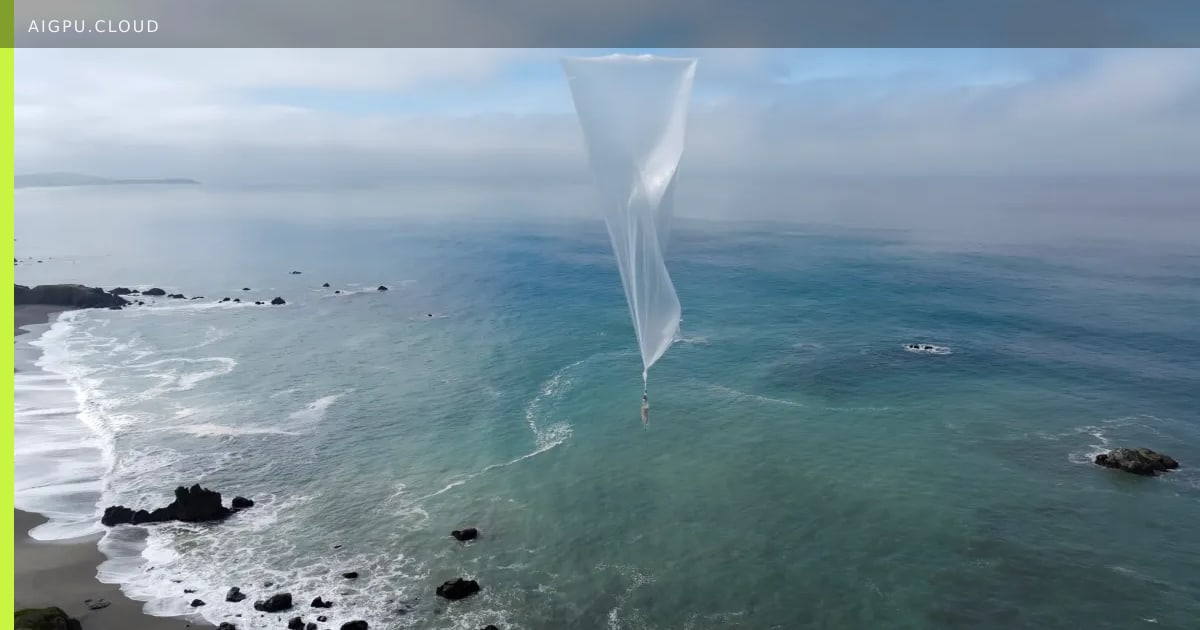
WindBorne Systems, the Redwood City startup operating roughly 700 autonomous weather balloons worldwide, has landed its largest government deal to date. The U.S. Air Force awarded a contract valued at up to $49 million for on-demand atmospheric sensor readings collected by the constellation. Unlike traditional procurement, the Air Force pays only when it orders data for specific regions and time windows, with $1.7 million already committed and more orders expected.
AI Forecasting Meets Real-World Sensing
What makes WindBorne distinctive is its tight loop between hardware and software. The balloons feed live observations directly into WeatherMesh 6, the company's end-to-end deep-learning forecasting model. Released this summer, WeatherMesh 6 claims higher accuracy than the physics-based simulation run by the European Centre for Medium-Range Weather Forecasts (ECMWF). The model leverages transformer architectures trained on decades of historical weather data — a compute-intensive workflow that exemplifies modern AI meteorology.
In August, WindBorne became the first organization to guide an unpowered balloon into the eye of a typhoon, navigating solely by adjusting altitude to catch favorable wind layers. That feat required both a large enough constellation for spatial coverage and a forecasting model precise enough to plan trajectories — a practical demonstration of AI-driven autonomous navigation at planetary scale.
Why it matters for GPU / AI infrastructure: Training and serving models like WeatherMesh 6 demands sustained, high-throughput GPU clusters for transformer training on massive spatiotemporal datasets. As AI weather forecasting moves from research into operational defense and commercial use, the need for reliable, scalable GPU cloud capacity — for both training runs and low-latency inference — grows in lockstep. Companies building sovereign AI infrastructure should watch this convergence of autonomous sensing and deep learning closely.
- aigpu
- ai gpu
- ai gpu cloud
- aigpu dubai
- weather ai
- defense tech
- autonomous systems
- transformer models
By AiGpu Editorial · Editorial rewrite based on public reporting (TechCrunch AI)
← All articles